Safety diver
What the safety diver does before, during and after the dive, and when something goes wrong.
Before the dive
- Over 18, with DAN insurance or equivalent.
- Certified rescue diver or higher, with good buoyancy control and the ability to react to fluid situations.
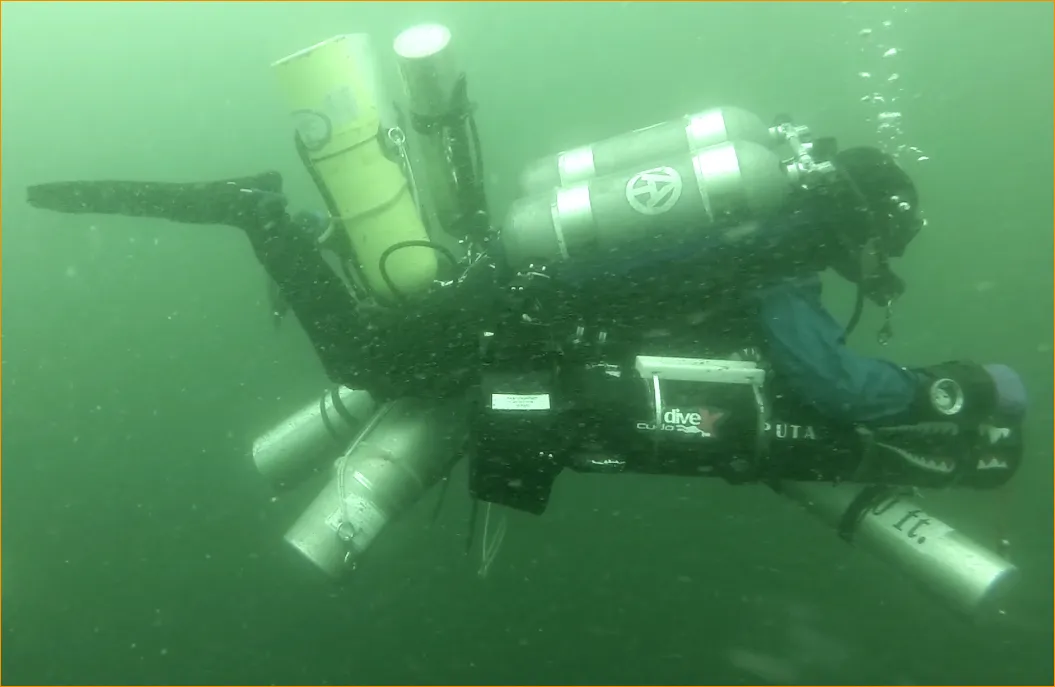
- Willing to learn each team member's gear: rebreathers from different manufacturers, open circuit, and flux capacitors.
- Willing to work with the captain to keep everyone safe.
- List the dive teams and their deco schedules on the wall chart, and check return times and 70-foot travel times.
- The safety diver documents every team's expected run times and tells the captain about any deviation.
During the dive
- When the last member of a team leaves the surface, write down the exact start time. Use one timepiece for the whole operation so everyone's on the same clock.
- Watch for surface marker buoys (see below).
- Get in the water to meet the last team's projected 70-foot stop. This can be a bounce dive.
- Count every diver and make sure they're all on the deco station. No OK signals needed: each diver is responsible for telling the safety diver about problems.
- If anything looks wrong, or a diver is in distress, alert the team or give aid straight away.
- Make sure the deco platform is clear of grapple lines.
- After the count, divers can hand off kit they no longer need: cameras, scooters, extra tanks. A donated scooter must have its trigger locked and the prop backed off.
- Never let divers load you with more than you can safely handle. Make several trips if needed.
- Return the extra gear to the boat and give the captain the diver count.
When something goes wrong
Surface marker buoy. The name on the bag tells you which team. Read the slate on the bag for what they need, and bring any gas or gear it lists. Descend the SMB line no deeper than necessary, without picking up any decompression of your own. Check on the divers, deliver what they asked for, take back anything they don't need, then surface, report to the captain and coordinate further help.
Rebreather bailout. Get an OK from the bailed-out diver right away. It's their job to tell you what they need, most likely gas. The safety diver coordinates gas donation from the team's spare tanks, may have to shuttle tanks between divers, and may need to go back to the boat for more.
Injured diver. Help them back aboard and put them on oxygen. Keep a written record of their condition and injury, and keep track of their equipment. Assist the captain and emergency services as asked.
Decompression sickness. An injured diver can't rule out DCS for themselves. If there are symptoms or concerns, the safety diver can call it a DCS hit, and everyone on the boat treats it as one. That call is final: no argument. Suspected or confirmed DCS is evacuated at the earliest opportunity, at the direction of the captain and the safety diver.